Category: Press

  • Israel Hayom Interview – The Politics of Folk Music

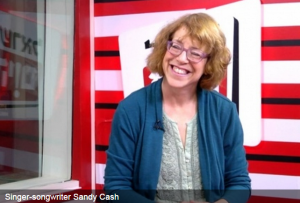
    Thanks, Steve Ganot, for hosting me in the Israel Hayom studio!

    What is the place of American-style folk music in Israel? • Does the music carry a political message? • Singer-songwriter Sandy Cash speaks with editor Steve Ganot about the folk music scene in Israel and abroad.

    WATCH: Folk music takes on the Middle East ‎

  • My 2014 US Tour – In the News

    As an independent musician, it’s up to me to promote my own shows (with a lot of help from my friends!). So I was pleased to see that my performances garnered some press, as well as an extended radio interview.

    First to hit the news stands was this piece by Michelle Mills, features writer for the Los Angeles Newspaper Group. This piece appeared in local papers all over town, and helped fill the audience at Altadena’s Coffee Gallery Backstage.

    “The great and exciting thing about narrative songwriting is that it activates the imagination. The audience has to follow the story as it unfolds,” Cash said. “The greatest moment of connection with the audience for me is when I see in their eyes that they are thinking. I like to make people think.”

    Other than the headline that claims I am a “former rabbi” (not!) it’s a great article.  You can read the whole thing here.

    A Flint, Michigan radio show also invited me to do a studio interview. Tom Sumner of WFNT is a musician, who also hosts a political talk show…a perfect combination for me! I was able to share a few of my songs while having a relaxed format (an entire hour) to answer questions about life in Israel.

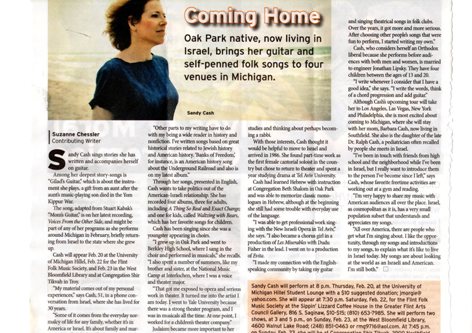
    Lastly, the Detroit Jewish News made my mom very happy by running this article to promote my shows in Ann Arbor, Flint, West Bloomfield and Troy, Michigan.  It even includes a mention of her grandchildren!


    Larger image here.

  • “Voices From the Other Side” and the Sandy Joke That Won’t Go Away

    The Jerusalem Post just ran a terrific feature article on me, and a review of “Voices From the Other Side.” With so many nice things to say, did they have to choose a headline that connected me with the superstorm that hit the northeast United States?

    http://www.jpost.com/ArtsAndCulture/Music/Article.aspx?id=290930

  • Gilad’s Guitar – Feature in Jerusalem Post Magazine

    The Human Spirit: Gilad’s Guitar
    By BARBARA SOFER

    The story of a young IDF soldier’s guitar and how it ended up in the hands of Sandy Cash after his death in the Yom Kippur War.

    As one of the more than 17,000 viewers of Sandy Cash’s clever and compelling “Egyptian Revolution Blues” on YouTube, I didn’t pay much attention to the guitar, just how beautifully she played it. I was struck by the wittiness of the lyrics and visuals, Cash’s opera-trained voice and Yale-developed acting talent. In under three minutes, Cash voices our skepticism at the international ebullience over Cairo’s demonstrations.

    I learned that Cash lived in Beit Shemesh. When Pessah took my family to nearby Moshav Yishi, Cash visited and, to my surprise and delight, had a guitar slung over her shoulder. On the back porch of the poultry farm turned magnificent Tuscan vacation villa, we enjoyed a private sing-along, children on the grass, the honeysuckle- scented hills dotted with pink and yellow flowers.

    Then she played the one about her guitar: “Gilad’s Guitar.”

    First finger, second fret Listen to the sound you get He loved me since the day we met I’m Gilad’s guitar He promised me when we were young I’d be her gift to a cherished one Now you are here, his will be done I’m Gilad’s guitar

    THE SONG, she explained, is an adaptation of American Jewish songwriter Stuart Kabak’s “Mom’s Guitar,” written after the death of a musician friend and honoring the passing of a guitar from generation to generation.

    Gilad Desheh, whose guitar Cash now owns, didn’t get the chance to pass it on. He died in the Yom Kippur War.

    Desheh was Cash’s husband’s cousin. Their son is named for him.

    Desheh began playing guitar and piano at the age of six in Manhattan. He could play anything he heard once.

    Just after his bar mitzva in 1965, he moved with his mother, Sue Desheh, and a Steinway piano from a second- hand shop to Jerusalem. He studied classical piano with teachers his mother found by recommendation.

    With his friends at the Rehavia Gymnasia High School and in the Scouts, Desheh played Beatles, Simon and Garfunkel, and Arik Einstein on his guitar. On a rare trip to the US, he and his mother chipped in together on the purchase of a second guitar, a prized Gibson.

    Desheh was sociable and popular, with a wry sense of humor, fierce loyalty to his friends and prodigious intelligence.

    Over the years in Israel, he kept up correspondence with Henry, the American best friend he’d left behind. Just before he turned 18, Desheh wrote: “… I frankly try to avoid philosophizing and thinking whenever possible, because it brings me nearer to a bitter reality – one of death and total uncertainty not only about the type of future ahead, but uncertainty about the existence of a future. (Try to avoid the phrase ‘…Makes me think I may never see you again’ – it only has one meaning here.) As we grow older the funerals we attend are of people we knew closely – a scoutmaster, an older friend, and the age difference is only two or three years, sometimes less. Rationalizing with possible and maybe even imminent death, of self, and even worse, of close friends, is hard and as I previously said I try to avoid it.

    The amount of sick jokes we tell is remarkable, and they get better every day; playing chess on previous graduating class pictures, the black spaces being people who were killed, or class reunions in the local graveyard, so that everyone can be present, etc. etc. etc. Anyway, I’m not so morose all the time, but I figure that if I’m telling about myself, I may as well tell it all.

    “Don’t be so sorry about writing so much about Israel – I love this damn place so much, that I even enjoy listening to people tell about how they like it. How about coming here for a year or so?” AS HIS mother’s only son, Desheh could be exempted from serving in an IDF combat unit. With his musical talent, he could serve in the army’s entertainment corps.

    But Desheh was determined to go into combat like his friends, one a pilot, another a frogman, the third in an elite infantry unit. To volunteer for a combat unit, he would need his mother to sign a waiver.

    “I pleaded with him that he was an only son. He said that was my problem, not his,” she remembered. “He said, ‘This is something I have to do now. If anything happens to one of them, I couldn’t live with myself. I’d get to be 35 and maybe be a bad husband, or a bad father, or a bad driver. I don’t want to have problems because I didn’t do what I had to do.’” She couldn’t sleep. She sought advice. A neighbor’s words resonated with what she’d already realized: “If you raise a child by certain values, and he wants to live by them, what can you say?” Desheh was designated outstanding graduate of his drill sergeant’s course, and after officer training, he was offered a place training future officers. He preferred working with raw recruits. Stationed on the Bar-Lev line in Sinai with his men in Company 10, Armored Battalion 79, he brought his older guitar and played through long nights in the bunkers.

    On October 6, 1973, in a surprise attack on Yom Kippur, 100,000 Egyptian soldiers crossed the Suez Canal.

    Four hundred and fifty Israeli soldiers strove in vain to stop them. Sue Desheh heard about the attack in New York, where she’d gone for a family wedding. She took the first plane back. In those days, parents could send radio messages to their soldier children. “Gilad, your Mom is back from the States” was broadcast on air. But there was no word from him.

    Six weeks after the war began, three figures appeared at the school where she was teaching: a doctor, a social worker and a city representative.

    “They told me to sit down,” she said. “I told them I couldn’t sit when they wanted to tell me something about my son.”

    He was missing, they said.

    A week later, the same threesome was back.

    “Again they told me to sit down. I told them I wouldn’t sit when they told me my son was dead.”

    Lt. Gilad Desheh of Company 10, Armored Battalion 79, was killed on the first day of the war. He was 21.

    “If anyone says that time heals, it isn’t so,” said Sue Desheh the week before Remembrance Day. “I didn’t get over it. I got used to it. When you lose your child, you are operating in a cloud. You go on. You continue, because what did he die for, but to let us live?” SUE DESHEH helped establish a music center for soldiers in Beit Halohem in Afeka. The vintage Steinway is there.

    She gave Gilad’s guitar to his girlfriend, but she died young of leukemia and the guitar came back. Desheh offered it to her nephew, for whom Gilad had been a role model, but it was his wife Sandy who would cherish it.

    Kabak, who wrote “Mom’s Guitar,” says he’s honored that “Gilad’s Guitar” has evolved from it. He’s hoping to meet Gilad’s mom one day soon.

    At this year’s annual gathering of family, friends and fighters of Company 10, Armored Battalion 79, Sandy Cash from Detroit and Beit Shemesh will be singing “Gilad’s Guitar.”

    First finger, second string Leave the buzz out, make me ring I know you have a song to sing I’m Gilad’s guitar The songs he loved will never fade, they live in all the dues we paid I sound better the more I’m played And I hope someday before we’re gone You’ll have a child and pass me on You can introduce me saying: This was Gilad’s guitar First finger, second fret Listen to the sound you get I loved him since the day we met I’m Gilad’s guitar In your hands now Oh, I’m Gilad’s guitar Make us proud.

    The author is a Jerusalem writer who focuses on the wondrous stories of modern Israel. She serves as the Israel Director of Public Relations for Hadassah, the Women’s Zionist Organization of America.
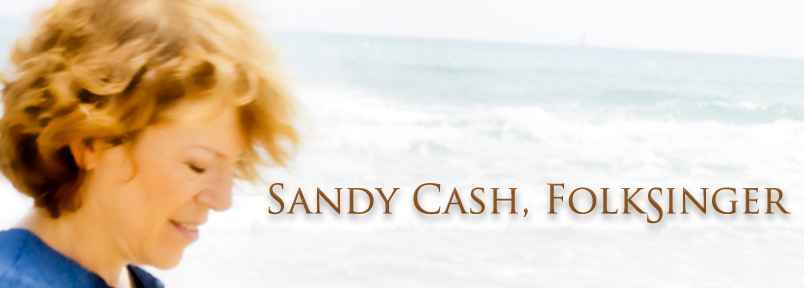
  • Witty, Wary ‘Egyptian Revolution Blues’ Goes Viral (Jerusalem Post)

    Witty, wary ‘Egyptian Revolution Blues’ goes viral
    By DAVID BRINN

    Sandy Cash decides to express herself in the way she knows best: By writing a topical song with barbed humor and posting it on YouTube.

    What do you do if you’re a local folk singer with a sharp wit alarmed by the events unfolding in Egypt and what it means for Israel?

    Sandy Cash decided to express herself in the way she knows best, by writing a topical song with barbed humor and posting it on YouTube.

    The song, “Egyptian Revolution Blues,” a satirical warning over viewing the Egyptian revolution in a simplistic good guy/bad guy mode, has garnered a few thousand views in only a few days online. And Cash is hoping that “what ‘We Con the World’ did for the fans of the Gaza flotilla, (referring to last year’s satiric video produced by Latma which became a huge viral hit) this song will do for those who think the unrest in Cairo is all about Power to the People (not to mention Peace, Love and Yellow Sunshine).”

    The clever clip juxtaposes images of 1960s civil rights demonstrations in the US with images of anti-government protesters in Cairo sporting photos of President Hosni Mubarak with stars of David scrawled across his face, while the song’s lyrics sport witty couplets like “Al-Jazeera, SKY and CNN, it’s like the thrill of Tiananmen” and “With huddled masses breathing free, while Mubarak twists in effigy.”

    For the last two decades, since making aliya from Detroit, Cash has been a staple on the ‘Anglo’ entertainment circle, and has appeared at popular events like the Jacob’s Ladder Festival and released her own CDs. Despite having written dozens of her own songs, she said that “Egypt Revolution Blues” was a revelation for her.

    “It was the fasted folk song I’ve ever written,” said Cash on Thursday. “I wrote they lyrics in two hours last Friday and the tune came into my head between candle-lighting and Kabalat Shabbat that night.

    “I realized it was the kind of topical song that I would either sing with my family and put away in a drawer where it would die, or I could try to get it out immediately because it was so tied into what’s going on right now in Egypt.”

    Cash sent a rough MP3 version of the song to her producer David Epstein of Shemesh Productions in Beit Shemesh, and early last week, they added other instrumentation, recorded the vocals in a studio and completed the song. Cash then approached a friend who creates creative videos for events and together, they storyboarded the song, found accompanying photos and within a few hours, they had completed a video which they uploaded to YouTube.

    “I put it up on Tuesday night and by Wednesday morning, it had already gotten hundreds of hits,” said Cash. “As of Thursday afternoon, it had received over 4,000 views.”

    “Comedy is a great vehicle for education and opening peoples’ minds,” said Cash explaining why she chose satire to magnify a serious issue. “Even though it’s flippant and funny, there is a message there. I hope that naïve people in the West will realize that the story of this latest revolution in the Arab World is much more complicated than it might seem.”

    “There are very real risks that very negative forces could come to power and the world as a whole, not just Israel, could end up being the worse off for it. I’m not a big fan of Hosni Mubarak – he was an authoritarian dictator who has ruled without elections for over 30 years. But he’s the evil we know. We don’t know what evil is coming down the pike.”

    Whatever it is, Cash will likely be ready to face it with her sharpened pen.

  • FAME Review – “A Thing So Real”

    A review written for the Folk & Acoustic Music Exchange (FAME)
    by Roberta B. Schwartz

    It is always a pleasure to hear something new from Sandy Cash, who opens up a window to her adopted land of Israel. A native of Detroit, Cash has been living with her family in Israel for the past eighteen years.

    A Thing So Real is Cash’s second studio recording. Like some of the best performers in the musical theater, she moves easily from the classic torch song to a comedic song and everything in between. She has the kind of voice – an alto with a lovely upper range – that is so easy to listen to that you won’t want to remove her CD from your player even after it’s ended. But more importantly, she writes great songs – both those that come from the heart and those that tell a story.

    One of the recording’s best cuts is Giorgio Perlasca, which tells the moving story of an Italian Christian living in Budapest during World War II. To avoid being sent to a labor camp, he sought out the Spanish diplomat to Hungary, Angel Sanz-Briz, who was known for issuing life saving Spanish passports to persecuted Jews. Soon after, Sanz-Briz fled Hungary, but Perlasca took on his name and role in his stead, eventually saving 3,500 Hungarian Jews from deportation and death. Cash’s skilled storytelling and delivery bring it to life.

    Songs of love and family abound. The opening tune, This Love is Only for You, is a beautiful love song. Stranger With One Heart speaks to the growing child within. But it is Cash’s sense of humor that draws us in every time. In The Boy Next Door she finds a pied piper for her kids who leaves her time for herself – to chat with girlfriends and cuss all she wants. Cash pokes fun at her therapist abandoning her for a summer vacation in The Madlibs Song, based on the book of fill-in-the-blanks exercises popular in the Sixties. It will leave you laughing and perhaps identifying with the songwriter’s plight. Survival of the Fittest plays with Darwin’s theory of evolution with great fun and wit. I love this song!

    It is clear from her music that Sandy Cash lives a life full of heart and love, and a lot of humor. Unlike many of her peers, there is something for everyone in her music. There is a universality in her style and in her message that is so appealing that it crosses all kinds of barriers. Who would have guessed that a child of Detroit, living a life in a place of continuing conflict as an adult, would know so much and still have a heart and a voice that speaks to all of us. It is good to laugh, to think and to love along with Sandy Cash. May she continue bringing her music to us for many years to come!

    Copyright 2004, Peterborough Folk Music Society and Roberta B. Schwartz.

  • Capital News (Jerusalem) Reviews “A Thing So Real”

    Capital News CD Review
    by Keren-Ami Armon, Jerusalem

    Those of us who have been lucky enough to be listening to Sandy Cash singing folk music for years have a special treat ahead of us.

    Sandy’s specialty has always been dramatic, thought-provoking songs. She brings her audiences into her music provoking both laughter and tears.

    The taste that Sandy gave us on her first CD may have a chance of being satisfied now with the debut of her second CD, A Thing So Real. Once again Sandy has brought us a CD full of humor and poignancy. This time entirely her own music.

    Every woman who has ever been pregnant can identify with her song Strangers With One Heart. The song will bring tears to your eyes when you remember the feeling of the little one inside you.

    Every mother can identify with the harried, hassled mother in The Boy Next Door. With tears of laughter, you wish you too had a “boy next door.”

    Cash’s song Giorgio Perlasca brings us to a time of bitterness, into the heart of a man who did what he thought was right, thereby saving the lives of thousands of Jews during World War II.

    And no song matches the power of The Children’s Brigade as we watch youngsters not yet out of school march to the tune of martyrdom and jihad.

    Sandy Cash has fulfilled her self-appointed job as folk “ambassador” to the Middle East, and has joined their ranks as a talented songwriter in her own right.

  • “Exact Change” Reviewed in Sing Out! Magazine

    A Sing Out! CD Review
    by Angela Page

    Sandy’s combined interests and talents have led her to merge into a unique slot in the folk music world…It’s obvious that Cash has an ear for a quality song… Israelis are fortunate to be able to hear these good writers in a live musical setting, sometimes thousands of miles away from their source.

  • Soundbytes (Canada) Review of “Exact Change”

    A Soundbytes CD Review
    by Bob MacKenzie, Canada

    One definition of folk music might be that it’s the music that emigrants carry with them from their old homelands and that sustains their identity as they become established in their new homes. This may be the definition that best fits the music of Sandy Cash, an American expatriot who has lived half her life in Israel. Certainly, in her publicity, Cash defines herself as “a new voice in folk music” and refers to her listeners as “folk fans.” The songs she sings tell compelling stories and in that sense may also be defined in some loose sense as folk songs. To be accurate, however, the performances of Sandy Cash belong more properly within the realm of American musical theatre.

    Cash is an interpreter of songs, and a fine one at that. Only two of the songs on this release were written by Cash. The rest were clearly selected for their sense of story and for the power of their telling. Given the wide variety of material from which she could have chosen, Cash demonstrates a finely honed instinct for excellent writing and for stories certain to move an audience.

    Cash has a powerful voice and an evocative, theatrical vocal style. This is not the voice or style we would usually associate with a folk singer. Rather, Cash has the power and broad interpretive style of a Bette Midler or Barbra Streisand or, in earlier years, perhaps Ethel Merman or Martha Rae. This is big, open performance that is as much acting as it is singing.

    “Kilkelly” is the song on Exact Change that most has the sound and feel of a folk song. Through a series of letters, Peter Jones’ moving lyric evokes a powerful image of a lifetime in Ireland during the hard times of the Nineteenth Century. The instrumental backing, while full in sound, is pulled back and marches along to a traditional rhythm. Cash imparts a plaintive, mournful sense to the words she sings, bringing the listener a deep-felt sorrow.

    David Roth’s “Nine Gold Medals” is an equally moving song in a whole different sense and has a very positive message for each of us as we move through life. This is a song about community and sharing and helping one another through whatever we might face. The writing is powerful and the interpretation Cash gives it could bring tears to many listeners’ eyes.

    Like “It’s Hard to be Humble” for sports fans, Roth’s “The Star Spangled Banner and Me” recounts the experience of performing the national anthem before a crowd who could really care less who he is. It’s a very funny story, well written and, as interpreted by Cash, well performed. This is also one of the most theatrical performances on this release.

    While the audience applause sounds on Roth’s song seem appropriate to the performance, the dentist drill sound effect on Camille West’s “Root Canal of the Heart” is mostly just irritating, and this very funny song would work just as well without it. I suspect the problem is not that the sound was used but that it’s just too high in the mix.

    In the name of the title song, there’s a deeper pun than the one on the name of Sandy Cash. The song plays around the idea that we cannot simply wait for change to happen but must exact it even though there may be costs associated with doing so. Of the two Cash songs on this release, “Exact Change” especially demonstrates that she has a way not just with interpreting the stories of others but also with writing and performing her own.

    Exact Change is an interesting artifact: music which is clearly American springing up in the middle east. However, this is music which, in its stories, transcends borders and cultures and resonates not just in the hearts of American expatriots but in anyone who can truly hear its human stories. Sandy Cash has a very special gift, that more than a singer, she is an excellent storyteller.

  • Rambles (Ireland) Review of “Exact Change”

    A Rambles CD Review
    by Nicky Rossiter, Ireland

    The world is certainly both contracting and exploding in unison. Exact Change, produced in Jerusalem, takes some very simple songs, often based on highly personal and mundane matters, and gives them an international dimension.

    It has often been said of literature that local issues are the ones that best translate to an international audience. Sandy Cash proves that the same applies to songs.

    “Nine Gold Medals” is a beautiful song telling a simple story based on a race at an athletics meeting. It is an uplifting tale of the reality of sport. Unfortunately, it only applies to that great event of the Special Olympics rather than sport in general. It has special significance as I listen today because this magnificent event takes place in Ireland in 2003.

    Cash has a very distinctive voice and from the array of songs and writers on this CD she is open to all manner of influence. The track “Bye Bye Future” is a tragic-comic tale of childhood hopes and fears sung in a childlike voice that fits perfectly. The story-song motif continues at breakneck speed on “Orange Cocoa Cake.”

    I was surprised to hear “Kilkelly” performed on a CD produced in Israel, but it was a genuinely pleasant surprise as Cash gives a heartfelt rendition of what must be one of the most comprehensive famine emigration songs of Ireland. At just under eight minutes, this is one of the epic songs of the genre but it holds the listener’s attention throughout.

    The CD takes some of the most unexpected twists and turns. Who has ever recorded a folk song about a visit to the dentist? Cash does this with nice lyrics and some very witty asides — ouch that drill sound sets my teeth on edge — on “Root Canal of the Heart.”

    She shows her songwriting ability on two tracks. My personal favourite is the title track, “Exact Change.”

    This is a lovely collection of songs, which she freely divulges was culled from many sources including the Internet. She very kindly includes the websites of the writers whose songs she uses. This CD shows the universality of folk music as it provides contemporary American folk music, collected globally, recorded in Israel and reviewed in Ireland. Now you can enlarge the connection by getting hold of this CD and listening to a collection of gems.

  • FAME Review of “Exact Change”

    A review written for the Folk & Acoustic Music Exchange (FAME)
    by Roberta B. Schwartz

    All of us have had moments, and sometimes even days, when we question “does life have to be so tough?” It is at these times that we look toward music to lift us out of these moods; to take us far away from these dark and dispirited feelings.

    I wish I had Sandy Cash’s CD Exact Change at hand every time a dark cloud crossed my sky. It is fun, playful, witty and wise. And it comes from out of the land of Israel, proving that acoustic music is alive all over the world.

    Sandy Cash has one of those voices that is hard to describe as it dips into the alto range, yet reaches up in to the higher ranges with ease. She has a lovely, expressive voice with a great deal of warmth and color. She sings as if the audience is full of family and friends – as if she knows us well.

    On her recording Exact Change, Cash sings nine covers and two of her own compositions. Her themes are down to earth, revolving around family, children and the foibles of everyday life.

    The opening track, Nine Gold Medals, is a delightful tribute to the Special Olympics, written by David Roth. It tells the story of how one of the young athletes stumbles and falls in a running event, and how the eight other runners stop to help him, join hands and finish together.

    Pirates Bounty is a lullabye penned by Cash. Beautifully performed with voice and accompanying guitar, it is simple and lovely. There are many nice metaphors here about life and how your children often surpass your own accomplishments.

    One of the standout tunes is a cover of You’re Aging Well that would make Dar Williams proud.

    My favorite cut is Kilkelly, by Peter Jones. It tells the story of an Irish family’s hardships in a series of letters beginning in the year Eighteen-sixty. The vocal is very sad and moving, made particularly so by Cash’s accompaniment on the English concertina. It is almost eight minutes in length, but well worth listening to through the last note. It is the highlight of the recording.

    Cash also covers humorous songs by Camille West and Cosy Sheridan, as well as Lou and Peter Berryman.

    Sandy Cash has produced a recording well worth seeking out. Acoustic music is live and well in Israel in the hands of Cash. The world of music is certainly a far happier and funnier place with Sandy Cash in it.

    Copyright 2000, Peterborough Folk Music Society and Roberta B. Schwartz.